

Why composition still wins: quick clarity for busy designers
Composition is the invisible architecture behind every successful visual. Whether you design a landing page, a poster, or a casino overview rating dashboard, strong composition determines what users notice first and what they ignore. In this article you'll learn 7 surprising composition tricks that are practical, repeatable, and tailored for modern interface and branding work. Each trick includes concrete examples for creating standout casino overview rating pages and design systems.

The goal here is not theory but applied techniques: visual hierarchy, rhythm, and subtle contrast that make a casino overview rating feel trustworthy and easy to scan. I'll walk through each trick, show when to use it, and provide a short checklist you can apply immediately.
1. Use asymmetric balance to create motion
Most designers default to perfect symmetry. Instead, try asymmetric balance to give a casino overview rating page energy without chaos. Place a dense block of ratings or badges on one side and counterbalance with white space and a strong typographic anchor on the other. This makes the page feel dynamic while preserving readability.
2. Leverage negative space as an active element
Negative space is more than breathing room—it's a compositional tool. In casino overview rating layouts, empty areas guide the eye to the most important metrics: overall score, featured bonuses, or critical trust signals. Use larger gaps around the rating summary so it instantly reads as authoritative.
3. Create focal points with deliberate contrast
Contrast is a fast way to prioritize information. Use contrast in size, color, or weight to make the casino overview rating and call-to-action stand out. A small, bright rating badge on a muted background can outperform a loud, cluttered header because it creates a clear focal point.
4. Grid breaks and the power of the unexpected
Breaking the grid deliberately—such as offsetting a rating card so it overlaps a hero image—can create memorable moments. The trick is to keep breaks purposeful: ensure they reinforce the casino overview rating and don't compete with essential content. This technique boosts memorability and click-through when used sparingly.
5. Rhythm: repeat elements to build trust
Rhythm lets users predict structure, which increases perceived reliability—crucial for a casino overview rating where trust is a core UX goal. Repeat visual motifs like circular rating badges, consistent microcopy, and aligned CTA buttons to create a reassuring cadence across the page.
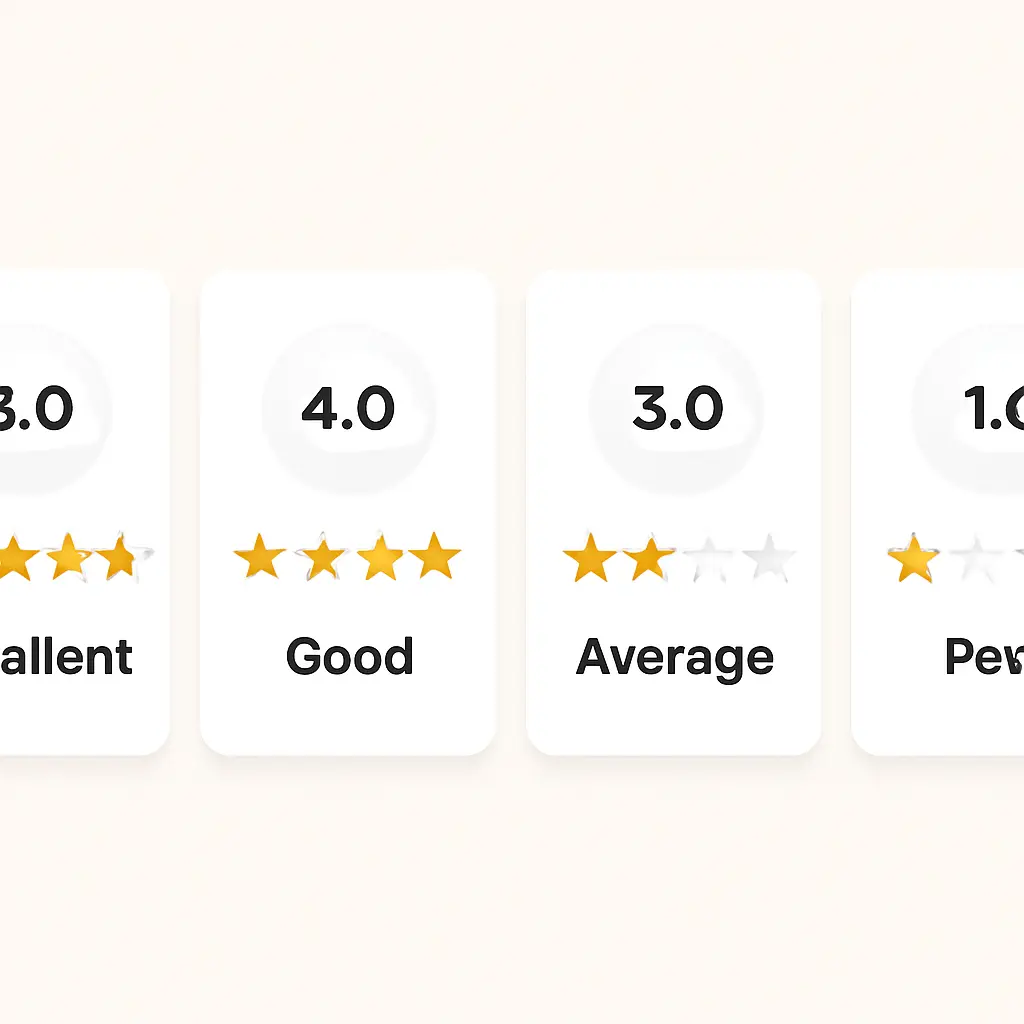
When you establish rhythm, users scan faster and convert more often. For casino overview rating pages, predictable placement of crucial signals (score, pros/cons, play button) reduces decision friction.
6. Use scale to indicate importance
Scale is an instinctive cue: larger elements feel more important. Scale your casino overview rating summary larger than supporting text and use progressively smaller sizes for details. This layered sizing creates a clear hierarchy without extra labels.
7. Micro-timing with animation
Subtle animation guides attention over time. A brief entrance for the casino overview rating or a hover lift on rating cards signals interactivity and can improve click rates. Keep animations short (<300ms) and purposeful to avoid distracting users and harming accessibility.
Practical checklist: applying these tricks
Here's a condensed checklist you can follow when designing or revising a casino overview rating page. Each step applies the methods above in a sequence that’s easy to test and iterate on.
- Define the single most important metric (e.g., overall score); amplify it with scale.
- Establish rhythm with repeated badges and consistent spacing (rhythm).
- Create one focal point using contrast; avoid competing elements nearby.
- Insert negative space strategically around the focal point.
- Try one asymmetric layout to add motion, then test for clarity.
- Add a micro-animation to the rating badge to grab attention without annoyance.
Quick visual reference table
Use this table to choose which trick to prioritize based on your project goals for a casino overview rating feature.
| Trick | Primary Effect | Best For | Estimated Time |
|---|---|---|---|
| Asymmetric balance | Adds motion | Hero pages, promos | 30–60 mins |
| Negative space | Improves focus | Score summaries | 15–30 mins |
| Contrast | Creates focal point | CTA & ratings | 10–30 mins |
| Grid break | Memorable moments | Landing experiments | 30–90 mins |
| Rhythm | Builds trust | List & comparison views | 15–45 mins |
| Scale | Hierarchy | Score emphasis | 10–20 mins |
| Micro-animation | Guides attention | Interactive badges | 30–120 mins |
Design patterns and testing tips
Always validate composition changes with real users or quick A/B tests. For a casino overview rating, test variations that change only one compositional factor at a time—like moving the score badge, adjusting whitespace, or resizing the CTA. These isolated tests reveal which compositional tricks actually improve trust and conversions.
Keep analytics tied to visual changes: micro-conversions like click-through on a rating detail or time spent on the comparison table are strong indicators that your composition is working.
When minimalism needs a caveat
Minimalist design can be powerful, but for trust-heavy interfaces like a casino overview rating, minimalism may remove necessary cues. If you're weighing minimalist approaches, compare a stripped-down layout with one that uses rhythm and subtle labels—users often prefer the latter for clarity. If you want to explore trade-offs in depth, read more about minimalist design.
Examples and quick patterns you can copy
Here are compact patterns you can paste into a design brief or hand off to a developer for a casino overview rating interface:
- Card stack with highlighted score: Use asymmetric balance and scale to make the top card dominant.
- Two-column summary: Left column holds the score and CTA; right column lists features with rhythm.
- Hero badge overlap: Break the grid subtly to have the rating badge overlap an image for memorability.
Conclusion: small changes, big trust
Composition is the set of small decisions that add up to big user trust—especially for a casino overview rating where clarity and credibility are everything. Use scale, negative space, rhythm, and intentional grid breaks to create pages that are both beautiful and highly functional. Start with a single change from this list, measure the impact, then iterate. Over time, these composition tricks will become a predictable way to increase engagement and conversions on rating pages and beyond.
Want a quick cheat-sheet? Copy the checklist above into your next design sprint and test one trick per release. You’ll be surprised how a small composition tweak can lift a casino overview rating’s performance and make your designs feel more confident.



To leave a comment, please sign up or log in
Log in / Sign up